Month: December 2011

  • Open listening: a way to improve spoken language comprehension

    One huge frustration I have with learning Spanish — and I understand I’m not alone on this — is missing loads of what’s being said while translating one particular word.

    While listening to a dialogue, my attention latches on to words I recognise and I try to retrieve the English translation. But before I find the English word, the speaker is three sentences away and talking about something else.

    This is probably a consequence of the way we tend to learn second languages — that is, using our first language as a useful intermediate between a new foreign word and a meaning we already know. But it can be a detriment in comprehension, especially in the earlier stages of learning a language, when listening is far more of a conscious process.

    This has nothing to do with the topic. I just find it funny. (Credit: Elephi Pelephi)

    Generally I think conscious translating is a mistake. There are times where it’s OK to do this, such as when there’s a gap in the conversation, but I find it’s best to stay focused on what’s being said, not to “zoom in” on any particular word.

    I’m hardly an expert and I don’t know what the more linguistically talented might think, but that’s my opinion. Just let go of the words you 50% understand, and keep listening.

    The Cohort Model of spoken language comprehension, first proposed by Marslen-Wilson and Welsh (1978), might explain why this works:

    “According to this theory, the first few phonemes of a spoken word activate a set or cohort of word candidates that are consistent with that input. These candidates compete with one another for activation. As more acoustic input is analyzed, candidates that are no longer consistent with the input drop out of the set. This process
    continues until only one word candidate matches the input; the best fitting word may be chosen if no single candidate is a clear winner.” (ref)

    Here’s what happens, according to the cohort model. You hear a Spanish word, say “beber” meaning “to drink.” It sounds familiar but you don’t immediately get the meaning. So you try to translate it, probably rolling your eyes upwards as you do so. Behind the scenes, your brain is creating a cohort of possibilities as to what the word was. Maybe it creates a shortlist of Spanish words starting with “b,” plus a few others that rhyme, and looks up their associated meaning.

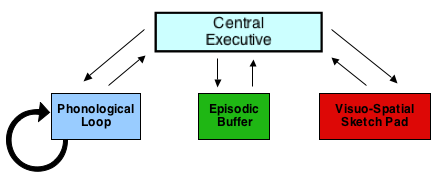
    Perhaps the reason you stop and put some conscious effort into translating this word, is that you intuitively feel that this is a serial process, where the brain translates words one-by-one, and either gets the meaning or loses it forever — but it is not. The brain does not stop searching for the meaning of an unknown word even though it continues to listen to other words — in fact, it actually uses the input from future words to help filter down to the correct meaning of previously heard words, presumably while they are held in the phonological loop.

    Have you every thought you understood what someone said, only to realise you misheard it based on something they said later? You could also deduce, then, that the brain doesn’t even have a concept of a correct word, and is always feeding back data based on probabilities; what it thinks is the most probable meaning.

    So to continue the example, if you continued to listen to the speaker instead of temporarily disengaging your attention to consciously translate “beber,” you might hear “cerveza,” the Spanish word for beer and put two-and-two together. The meaning of the previous word comes to you in a flash.

    Open Monitoring/Listening

    This method of listening is very similar to a type of meditation called open monitoring. In this you sit and just allow any thought or perception to pass through your consciousness, being fully observant of it but not holding your attention on it.

    Likewise, in open listening, as it could be called, you focus on the entirety of what is being said, rather than trying to follow the dialog word by word. By not focusing on a single word, you devote more of your attentional capacity to collecting more input.

    You might also reason that the more practice one has with open monitoring meditation, the better they should be at language comprehension.

    If you speak a second language let me know if you found the same when you were learning. Also, if you meditate a lot, let me know how you find language learning, or comprehending people in even your native language. Do you seem to find it easier than others to understand people with strange accents? Has this improved after your meditation experiences?
  • Playing Medal of Honor improves cognitive abilities

    Just to expand on the previous post about the effect of action video games on attention, here’s a little more detail about the experiment in the paper.

    In this test, a group of participants, all with little or no video game playing experience, were randomly assigned to two groups.

    The first group (9 people) were asked to play Medal of Honor, for one hour per day, for 10 straight days. The second (8 people) played Tetris for the same time period. This is a good control condition, because it helps to cancel out improvements that might be made in, for instance, hand-eye coordination as opposed to actual cognitive improvements.

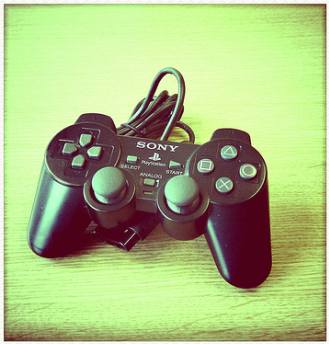
    Playing this game may bring cognitive benefits.

    At the end of the training, participants were giventhe enuration, useful-field-of-view and attentional blink tests described in this post. The group who played Medal of Honor performed better than the Tetris group, and this difference was statistically significant at the .05 level.

    Additionally, the researchers carried out a mediation analysis, to see if the benefits on these tasks could be accounted for by game playing skill. In other words, did the people who improved the most at Medal of Honor over these 10 days also perform the best on the cognitive tasks? The results did not reach statistical significance (0.13), altough the effect was pretty strong with an adjusted r squared of 0.43. That means 43% of the variation in cognitve performance was accounted for by improvements in playing Medal of Honor.

    These results suggest that playing Medal of Honor garners improvements in the attentional processing systems of the brain. However, note the limitations I mention in the previous post on this study.

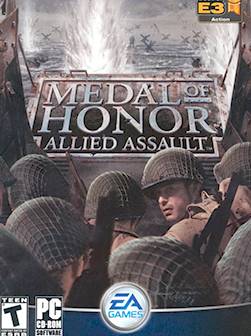
    Note that the version of Medal of Honor they played was Medal of Honor: Allied Assault, from 2002 (the study was fromn 2003). However, it’s perfectly reasonable that the results apply to more recent versions of the game (both are first person shooters).

  • The cognitive benefits of playing video games

    It’s often said that the youth of our society wastes their time playing video games; ostensibly a purely diversionary activity with no inherent merit. However, as someone with a youth misspent in this way, I have to disagree. There are many ways I feel video game-playing may serve me well in the future. For example, should powerful aliens invade our planet and challenge our species to a Street Fighter II tournament, killing all those who they defeat, I for one would fancy my chances. However on a more mundane level, research published in Nature indicated that video game brings cognitive benefits that transfer to activities other than the game itself.


    Waste of time or brain trainer? credit: blindfutur3

    Flanker compatibility

    In this test, participants are distracted on a task by stimuli, which they have to ignore. The task becomes progressively more difficult, so it’s a good way of testing attentional capacity. When video game players were tested against non-players, they performed better on this task, suggesting they have greater attentional capacity.

    Enumeration task

    In this second task, squares flash on a screen briefly, and participants simply have to say how many there are. If there’s a small number of squares, you just ‘know’ how many there are. This is called ‘subitizing.’ As more and more squares are displayed you eventually lose your ability to subitize and must count the squares manually.

    Video game players could subitize greater number of squares than non players (4.9 vs 3.3 on average), again this is consistent with the idea that video games bring beneficial effects — or at least, that video game players possess these benefits. In this case, the benefit is being able to focus on more distinct objects at once.

    Widening the training zone

    The next task was the “Useful Field of View” task, where the aim is to locate a certain target amongst a field of distracting ones. However, the twist here is that the field of view is extended to three eccentricities — 10, 20, and 30 degrees. The field of view when playing video games typically reaches around 20 degrees, so this is a good way to see whether the attentional benefits video game players have extends beyond the range of view they experience whilst playing. The results indicated that the players outperformed non-players at all ranges.

    As with the previous tests, this is tricky to interpret. On one hand it could indicate that video games bring attentional benefits, and that these benefits extend beyond the normal field of vision experienced while playing. On the other hand, it could simply indicate that some people take to video game playing because they have better attentional qualities to begin with. Because this task is further from the conditions of the video game playing itself, you might reason that it is more in line with the latter. It’s impossible to say because this was a quasi experiment — there was no randomisation of group assignment.

    Quick thinking – the attentional blink task

    A common aspect of the games played by the participants is the need to act fast under pressure (see below for a list of games). To see if there was a difference on this ability between video game players and non-players, a variation on the attentional blink task was used.

    In this task, a stimuli is displayed, followed 200-500 ms later by another. Typically, people have trouble processing the second stimuli because of fixation on the first. In the variation, participants had to detect a certain following stimuli from a sequence which included a few distractors. Again, the video game players out-performed the non-players.

    Incidentally, experienced meditators also do better on this task.

    Experimental task

    As mentioned earlier, it’s impossible to determine cause and effect conclusively with this type of study. By selecting specific groups (players versus non-players) instead of randomising, you never know if you’re simply selecting groups who differ on the variable you’re studying to begin with. For instance, do video games attract or create people with enhanced attentional abilities.

    To get around this, and experimental task was performed, where a group was told to go play an action video game, while another went off to play a puzzle game. The action video game players did better on the enumeration, useful field of view, and attentional blink tasks after training.

    Video games are beneficial for attention?

    While these results are consistent with the idea that video game playing brings cognitive benefits, the studies do have some limitations. Mainly, the sample size was pretty low. The enumeration task had the highest number of participants, and even that had only 13 per group. The others has only eight or nine per group.

    For the quasi-experiments, this makes it even more likely that the results were due to the samples selected, despite the fact that they were highly statistically significant. For the experiment, the same applies. The significance levels were higher in the latter but that’s expected given it was only for 10 days.

    Also, the transfer is fairly similar. Action video games and these tasks still involve sitting and looking at a screen. We don’t know if the results would be different in other situations in more natural settings. But overall it’s nice that by video game playing might, possibly, have benefits beyond helping me defeat an invasion by 2D beat-em-up-obsessed aliens.

    Which games did they play?

    In the tests comparing video game players with non-video game players, here’s a list of games that the players were into. Note that this study is from 2003!

    • Grand Theft Auto 3
    • Half-Life
    • Counter-Strike
    • Crazy Taxi
    • Team Fortress Classic
    • 007
    • Spider-Man
    • Halo
    • Marvel vs Capcom
    • Roguespear
    • Super Mario Cart

    Reference:

    Green, C. S., & Bavelier, D. (2003, May 29). Action video game modifies visual selective attention. Nature, 423, 534 –537.

  • The phonological loop and language comprehension

    I’ve been digging into research papers again, looking for ways to enhance second language acquisition. After working through a few papers and an introductory text book, I was left thinking “When are they going to get to the part about how to learn languages better?”  Most of the research seems to be on the processes and issues surrounding second-language acquisition, rather than how to enhance it. So I went right back to the drawing board and started looking at the cognitive processes involves in language comprehension and production, looking for clues. I started with the phonological loop.

    The phonological loop is the aspect of working memory that deals with auditory input. Loads of studies have been done on this which I won’t go into here, but one hugely important point is that the loop’s capacity is time-based. For example, memory of two syllable words is worse if they are longer (voodoo, harpoon) than if they are shorter (bishop).

    Something I’m particularly interested in, is improving language comprehension. I often find that I can listen to something in Spanish, not understand it at all, but upon reading a transcript realise that I know all those words. I think the time-based limitation of the phonological loop might be a key to improving this.

    If a person is speaking to you in a foreign language, you often find that although you’re focused on what they are saying, nothing makes sense. Then, they pause for a moment, and the meaning of the last few seconds of speech magically comes to you. It’s as though the brain is occupied with attending to the incoming speech, then when there’s a pause it takes the chance to process whatever’s in the phonological loop. Assuming this is true, there are a few things that might help with language comprehension:

    1 – Increase the capacity of the phonological loop

    The bigger this is, the more you can hear and keep in your working memory until the pause comes. I couldn’t find any research on actually improving the size of the loop’s capacity, but I’ll keep looking. Let me know if you know of any. Something to consider here is the difference between actual gains in the loop’s size versus the use of strategies to more efficiently store information within it (chunking, etc) — and how and if it is possible to distinguish between the two.

    This is important because if capacity could seemingly be improved on some task via a strategy, but that strategy doesn’t transfer to languages, it’s a false friend, so to speak.

    Presumably, tasks specific to comprehension would improve the capacity of the loop, that’s assuming that it can be improved at all. Maybe things like the n-back task, set to audio only, or simply listening to short speech clips and trying to repeat it back straight afterwards (ideally in the target language), could be good exercises.

    2 – Ability to pay attention

    I’ve noted previously that attention is key to memory, and it’s pretty clear how attention fits into this model. If you keep focused on what they are saying you’ll get more of what they say into your phonological loop for later processing. Then when the conversational pause comes, your brain has more data to transform into something meaningful.

    3 – Speed of processing

    Note that this only applies to words you don’t know “automatically.” If they said “Gracias” or “Merci,” or something in your native language, the meaning would come to you. So at the most basic level, there’s an issue of learning the language well and knowing the words well, preferably without having to do “real-time” translations via your native language. The more of the data in the PL that you just “know,” the more time your brain has to work on the bits it doesn’t already know, and also, it can use the words it does know to narrow down the range of possibilities (more on that later).

    Phonological loop in language acquisition

    Just to turn everything I’ve just said upside-down, another consideration with the phonological loop is that it’s not solely applied to language comprehension — in fact, it may not even be critical for that (except perhaps in the cases I’ve noted above, during the initial stages of learning a language where listening is an active — and draining — task!).  It is strongly implicated in our ability to learn languages. For example, Gathercole and Baddeley (1989) found that a children’s performance on a word-repeating task predicted their vocabulary a year down the line. So we must be careful here not to confuse correlation with causality, because, for instance, we don’t know if changing our ability on word repeating tasks would improve our language acquisition abilities. It does seem more reasonable that this would improve our ability to comprehend language, however, for the reasons I described above.

  • Bilinguals perform better in the false belief task

    Anything you do for an extended period of time has neurological and cognitive effects. Speaking another language is one thing that seems to have a wide range of effects, one of which being performance in tasks involving reasoning about other people’s beliefs, such as the false belief task.

    The False Belief Task

    The false belief task had usually been applied to samples of children (and you’ll soon understand why), but Rubio-Fernández and Glucksberg (2011) of UCL and Princeton applied it to a sample of adults — after a few modifications

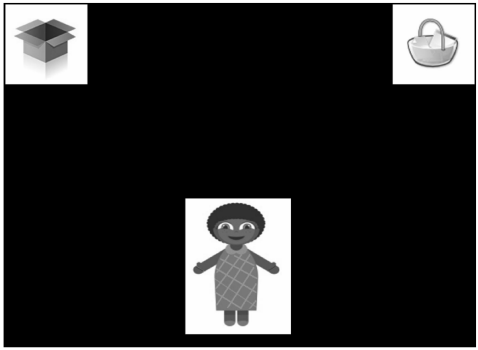
    The task involves a puppet show (told you), where two puppets, Sally and Anne are playing with a toy. Then then put the toy in a box, and Anne leaves the scene. While Anne is away, Sally puts the toy in a different box before she returns. When Anne does get back, the participants are asked where she will look for the toy.

    Monolingual children start getting this right at about age four on average. It’s part of the idea of a “Theory of Mind,” where you adopt the belief that other people have a mind just like yours, but separate, and with different knowledge to  you have they will take different actions.

    However, bilingual children are better at this task, correctly guessing that Anne will look in the box where she saw it last, as opposed to where they saw Sally place it, from around age three.

    The idea is that because bilingual kids have experience talking to people in one language and receiving blank stares, they learn earlier that other people have a separate mind to their own. Which is also in line with the idea that the theory of mind is just a social construct, something that people “figure out” as opposed to a module that develops.

    The adult version (not what you’re thinking…)

    The False Belief task. Ecological validity?

    Although everybody loves a good puppet show, you might see a difficulty in applying this same task to adult bilinguals – adults are all going to answer the task correctly, regardless of their lingual status. So the researchers added an eye tracking element to the test.

    Rather than using the participant’s guess as to the location of the toy as the dependent variable, they used eye movements – did the participants first look at the box where the toy actually was (using their own knowledge) before looking at the original box (reasoning about other people’s beliefs)?

    Oh, and the puppet show was replaced with a cartoon on a computer (I know, I was disappointed too).

    How did the adults do?

    As with the children, the adult bilinguals out-performed their monolingual peers. Comparisons of gaze directions between the two groups just sneaked under the holy .05 significance level: X2(1, N = 45) = 3.94, p < .048. So did the fixation latency – the time take to focus the gaze on the correct box – at t(44) = 2.07, p < .045, as you might expect given that more monolinguals looked in the wrong place first.

    The Simon Task

    The researchers also used another test – the Simon Task. In this, a key is assigned for “LEFT” and another for “RIGHT.” the words LEFT and RIGHT flash up on the screen, and you have to press the right key. Only, sometimes, “RIGHT” appears on the left of the screen, and vice-versa. If you want to give it a go, you can play a Java version here.

    Success in this game relies on overriding your natural instinct to press the button on the right, even when the game tries to trick you into doing so. This is called “Executive Control” in cognitive psychology, after the catch-all term “Central Executive” which is used to describe pretty much anything we don’t understand yet. 🙂 See this article on working memory for more information.

    As with the False Belief test, the bilinguals did better here too. Why would this be? It’s thought to be because this sort of executive control is old hat to bilinguals. They have to suppress the other language while speaking and thinking, and this transfers to other tasks involving executive control.

    Combining the Two

    The paper also reports a correlation between performance on the Simon task and performance on the False Belief task – so presumably, the same cognitive ability is involved in both tasks, and bilingualism is the cause of this improved ability – or something that goes hand-in-hand with bilingualism, at the least.

    What’s a bilingual?

    Bilinguals performed better, but at what point in second language acquisition does this effect occur? The authors note that “all participants were to some extent familiar with a second language.” So that includes people designated as monolingual. The actual criteria they used was:

    1. Learned the language before age 9
    2. Used it regularly for over 10 years

    However, the bulk of the group achieved bilingual status much sooner, with a self-reported mean acquisition age of 3. The extent of foreign language familiarity of the monolinguals was not reported. It could be a few years at school, it could be they bought a Spanish CD and listened to it twice.

    Presumably, this effect would occur no matter when in life the second language was acquired. This fits with the executive control explanation. I’m not sure how to explain these results without it, but if they did the same test on people who acquired language two after, say, age 30, and didn’t get the same results, it might be interesting to try to reconcile the two.

    Conclusion

    This is one of many studies demonstrating cognitive differences between bilinguals and monolinguals. Low ecological validity, and only marginally significant results (probably due to the fairly low sample size), also necessarily a quasi-experiment (non-random group assignment by default). However, the results are in line with a lot of other evidence – although bilinguals perform worse on some tasks, on this one they seem to do better.

    Reference:

    Rubio-Fernández P, & Glucksberg S (2011). Reasoning about other people’s beliefs: Bilinguals have an advantage. Journal of experimental psychology. Learning, memory, and cognition PMID: 21875251

  • Resilience applied to food

    I saw a TED talk that made me think about resilience, and how it’s such a broad and useful concept to have in your mental repertoire. You can apply it to anything and it will give you useful, practical ideas. This example is access to food, but I think the general formula can apply to anything.

    For a culture that praises individuality and “making it on your own,” we’re pretty dependent on other people and external systems. That’s not necessarily bad, but for some people it sets off an internal alarm bell – what if these external systems were to fail?

    That idea is not implausible. It happened to every society that went before us and many more that once existed concurrently to ours.

    Resilience

    In psychology there’s an excellent concept called resilience. Some people are more negatively affected by trauma than others. These people are more resilient. Trauma and difficulties bounce off the highly resilient like bullets bounce off Robocop. Less resilient – more fragile — people are not so lucky. It takes a weaker blow to psychologically knock them down, and they have a harder time getting back on the horse afterwards. [1]

    Many factors determine who is psychologically resilient and who isn’t, and I can write about that if you want. But for the moment let’s expand the idea outside of psychology and into one of the basic survival needs – food. How resilient is our access to food?

    Getting Food

    At the moment you work for money, then buy food with that money. This relies on:

    • Having a job/money
    • There being affordable food in the shop

    Without either of these two things, you can’t get food.

    Money

    How resilient is your income? How secure is your job? What’s the economic outlook? Do you have savings? Is your currency’s value going to hold?

    Shops

    Shops rely on transport, which relies on fuel, which relies on the price and availability of oil. If oil prices go up, so do food prices. If your country is a net food importer, its system is fragile to the same extent as the countries from which it imports.

    Assessing Food Resilience

    Lots of other things could affect your access to money and your local supermarket’s access to food for it to sell. Look into them. For each one, ask yourself, “What would happen to my access to food if this happened?” For example, if oil prices went up, if you lost your job, if the government cut back unemployment benefits, etc.

    Knocks to the System

    Resilient systems can absorb trauma and keep going. Fragile systems crumble. Anti-fragile systems [1] get stronger through trauma.

    Now that you’ve researched and thought about it, is your “access to food” system resilient? What about in five years, or ten years?

    If you consider your system resilient, let me know why – Do you have a garden? Will the market provide? Are you Ray Mears?

    Increasing Resilience

    If you can maintain your access to food in the event of the factors you identified earlier, your system is resilient. What might this look like?

    • Growing food
    • Urban homesteading
    • Having chickens
    • Stored rations/preserving food
    • Foraging skills
    • Wasting less

    And so on. These are resilient to wider, global problems and hence are more resilient. But each one of these are fragile to different factors. If everyone in your town learned to forage, the skill would be useless if everyone quickly stripped the land. So you might have to go through this process several times, thinking out contingencies.

    I like the general process though and I think it’s worth going through these steps for a number of key areas (food, water, transport, energy, health, mental health, community, entertainment… etc).

    Here’s the visual aid:

    [1] Naseem Taleb has argued that these two concepts – resilience and fragility — are not opposites. The opposite of fragility, he argues, is anti-fragility – a quality whereby variance actually strengthens its possessor, as opposed to its possessor being simply immune to the negative effects of variability. A related concept in psychology is post-traumatic growth, which is a positive psychological-style approach to reaction to trauma; and a valid viewpoint I think – if you only study post-traumatic stress, that’s all you’ll find.