Month: November 2010

  • Degree in forensic psychology

    A degree in forensic psychology covers topics that link the psychological research base with the criminal justice system and other aspects of criminal behaviour.  Degrees in forensic psychology are usually taken at masters level, however they are sometimes available at bachelors level.  Of course, there are significant differences between the two.

    degree in forensic psychology
    Forensic psychologists often work in or with the courts. That’s judicial, not tennis (Photo: srqpix)

    Bachelors degrees in forensic psychology

    A bachelors degree is very similar to an other accredited BSc psychology degree.  You will still cover a lot of ground within the subject, from the biological basis of behaviour, abnormal psychology, cognitive approaches, research methods, to conceptual and historical issues associated with the scientific study of the brain and behaviour.  In a normal psychology degree, you are usually given several optional modules to choose from, particularly in the second and third years, of which forensic psychology might be one possible option.  In a bachelors degree in forensic psychology, several of these optional degrees will cover forensic psychology.  This allows you to get the bird’s eye view of the field that all psychology students get, as well as a more focused look at forensic psychology.  You can then get a better idea of whether forensic psychology is for you, and if you do decide to continue your studies at masters level you’ll have a better chance of getting on the course, all other things being equal.

    Masters degrees in forensic psychology

    To get on a masters degree in forensic psychology, you’ll usually need to have a bachelors in psychology or equivalent. The topics you’ll cover here include the psychology of criminal behaviour, research issues in forensic psychology (recording and defining crime, for example), psychology and the courts (for example, for juries reach decisions, why eye-witness testimony is unreliable), and offender profiling (which isn’t as glamorous as they make it look on TV).

    You’ll learn and be graded in the usual ways – lectures, group work, essays, exams, and so on. You’ll also have a large dissertation project to do related to forensic psychology.

    Forensic psychology degrees online

    If your schedule makes it hard for your to show up for lectures several times a week, see if you can find a forensic psychology degree online. Distance learning would mean you get all your course material via email, and you’d hand in your work the same way. In some cases you might get video conferencing with your tutors. Although you have to motivate yourself more with an online degree than you would with an on-site degree, if you really can’t make it to campus this is an option. Always ensure you’re studying at a reputable college or university offering accredited qualifications.

    Career opportunities with a masters degree in forensic psychology obviously revolve around working with the police, the courts, prisons, probation service, or research in these areas.

    If you’re thinking of taking a forensic psychology degree, subscribe to this blog, and get regular updates that will help you learn psychology and get more out of student life. You might also like my psychology study skills book, which will help you get better grades on your course.

  • Famous people with a psychology degree

    A psychology degree doesn’t have to lead to a career as a psychologist. In fact, it can lead to fame, stardom or infamy. Or at least, it preceded one or more of these things for the following people…

    Hugh Hefner

    The Playboy founder graduated from the University of Illinois at Urbana-Champaign with a B.A. in psychology. He also studied for qualifications in creative writing and women and gender studies. These seem pretty relevant, I wonder how the psychology came into play?

    Natalie Portman

    natalie_portman_psychology_degree
    Photo: makoto2007

    Natalie Portman enrolled at Harvard to study psychology after her career had taken off. She was involved in the Star Wars prequels at the time (1999), and graduated in 2003. “I don’t care if [college] ruins my career,” she told the New York Times, “I’d rather be smart than a movie star.” Well since a Golden Globe for best supporting actress came the year after that, it looks like she managed to have her cake and eat it too. She’s also credited in a research paper, “Frontal Lobe Activation during Object Permanence: Data from Near-Infrared Spectroscopy,” under Natalie Hershlag (it’s Hebrew).

    Gloria Estafan

    With seven Grammy awards and over 90 million albums sold worldwide, Havana-born Gloria María Milagrosa Fajardo García de Estefan is certainly a talented and popular lady. But she’s also smart, graduating in 1979 with a B.A. in Psychology, with a minor in French, from the University of Miami. So unlike Miss Portman, Mrs Estefan completed her degree before hitting the limelight.

    Jon Stewart

    Best known for The Daily Show, American satirist, author, actor and comedian Jon Stewart majored in psychology at the College of William & Mary in Virginia. You can see a bit of the critical thinker in him in the video above, too.

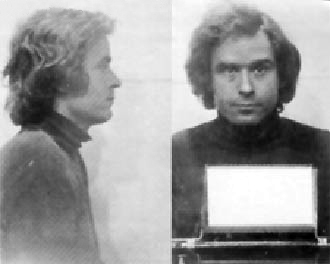
    Ted Bundy

    When serial killers are shown in film and TV, they are sometimes portrayed as cool, self-aware characters with a hidden secret, maybe a little eccentric but generally fit in OK. In reality, this isn’t always the case, although Ted Bundy comes close to that model, fitting into what the FBI define as an ‘organised’ serial killer. Bundy attended Seattle’s University of Washington. Reportedly well liked by his professors, he graduated with a degree in psychology in 1972.

  • Growth mindset versus fixed mindset

    There’s two types of mindset that are relevant to studying – the fixed mindset, and the growth mindset. People with the growth mindset learn better and get better grades than people with a fixed mindset.

    What are they?

    A fixed mindset is the belief that intelligence (or any ability) is a fixed trait, that you’re born with and can’t do much to change. A growth mindset is the belief that intelligence can be developed. Why is this important? Because if you have a fixed mindset, then the results of an essay or other test are a reflection on your intelligence. People with fixed mindsets don’t want to risk finding out that their intelligence is low, so they give up easier.

    People with growth mindsets care little about the results of test, because they don’t see it as a reflection on themselves. They know they can learn and develop, so they take on more challenges rather than avoid them, and persist more, especially in the face of setbacks.

    What’s your belief about your intelligence? Do you think the grades you get on this course are a reflection of you? If you got a bad grade, would you think “I’ll be bad at this no matter what I do,” or, “If I try harder I’ll do better”? The research suggests that being in the latter group – having a growth mindset – will help you get better grades, and it’s also more rational, because you can develop your skills, especially your study skills.

    Watch this for more:

    And now the big question – how do you change from a fixed to a growth mindset? More on that soon (I’m not building suspense I just didn’t realise how late it was…).

    References:

    Here’s one paper, and here is Carol Dweck’s (the main researcher of mindset) page with lots of stuff.

  • Use your dissertation as a career tool

    use_your_dissertation_as_a_career_tool
    Looking for direction? (Photo: dr_tim_1956

    One of the advantages of psychology is the wide range of topics it covers. It means you can get a wider education than other degrees because you dip your toe into a lot more topic areas, albeit from a psychological perspective. The variety is good for people who like to learn, and it gives good opportunity to draw different lines of work together in assignments (which, depending on the essay, can be a great way to pick up extra marks).

    But studying such a broad subject can also be a disadvantage. Although psychology is a useful degree and teaches important thinking skills, there isn’t a definitive career path open to you when you finish, as there is with something like graphic design. If you want to be a psychologist, no problem, you just get the extra training. But some people don’t want a career in psychology. Maybe they chose it purely for interest, or because they weren’t sure what they wanted to do and psychology seemed like a good idea. For these people, the broadness of the subject can seem like a negative, however, the problem can tempered somewhat by using the dissertation as a career tool.

    Say you decide in year 2 that you want to be a dietician, but you’re going to finish this degree first. You could choose a dissertation topic around diet, which will allow you to learn more about it, become familiar with the research, and have something you can talk about when you get interviewed on future courses. Or, say for some reason you want to go into HR, you’d do a dissertation around selection perhaps.

    It doesn’t work for everything, linking your dissertation into accountancy, or music production might be a challenge, for instance. But even if you can get close to the subject it will help. You could do some research on the employees of the profession you want, and interview them. This might at least get you close to that field — in that environment, talking to people in it, networking. It gives you something to put on your CV and talk about in job interviews, and most of all it hopefully helps you feel like you have some direction.